Data can help Europe navigate through turbulent times
One of the reasons I joined Splunk six months ago was because I am convinced that data has the potential to solve some of the biggest challenges society faces.
It’s safe to say that Europe faces a number of challenges at the moment. The legacy of Covid-19 and the geo-political situation in the region has had a significant impact both economically and on society as a whole. Climate change remains a major concern after a year marked by drought and extreme temperatures.
One of the few resources that we can lean upon to address these issues is data. A resource that is growing exponentially and which has the potential to inform policymakers in a way that previously hasn’t been possible. Built into operations, it can support the growth of a resilient organization at multiple levels. Driven by necessity, the use of data for public sector service delivery and policymaking took a leap forward during Covid. However, government has typically lagged the private sector in using data to drive progress.
So the question now is - have governments been able to maintain the momentum they have in this area?
To better understand the progress made in harnessing data to address societal problems, Splunk commissioned WPI Economics to produce a study into the state of play in the Netherlands, France, Germany and the UK.
Through a unique framework developed by WPI Economics, each country in the study was benchmarked and placed within country typologies based on two key factors. The first is the strategic emphasis placed on data use within policymaking and the extent to which a government is data-driven. The second factor is to what extent the right data governance foundations are in place to enable better use of data from an operational perspective. This includes the quality of data, security and the level of data integration within government.
The main research study can be found here with the country-specific reports also available:
So what was the key finding of the study?
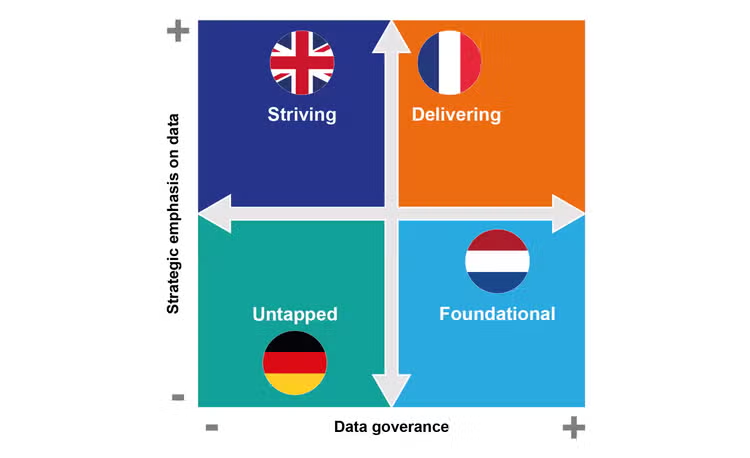
France is delivering on the promise of closing the data divide, although there is still room for improvement in security considerations, and work to do in the sharing of government data. The Netherlands has stronger data governance foundations with good data-sharing principles in place. The UK has more ambitious data innovation initiatives and a strong strategic emphasis on data. Germany’s potential data dividend remains largely untapped, held back by inadequate data governance and insufficient strategic emphasis on data, although the government recognizes the existence of a data dividend and aims to address it.
However, the purpose of this study was not to consider countries against one another but to understand where opportunities remain. What’s clear is that all are making positive progress towards the better integration of data within decision and policymaking, but the journey must continue in order to truly deliver a data dividend to citizens.
As we go through turbulent times it is critical that organizations across the European public sector continue to move towards delivering a data dividend to their citizenry. Progress will have to be made in this area if we are to exit the current economic and societal challenges in a more resilient way, able to tackle the inevitable challenges we will continue to face.
Related Articles

Predictions: a Deeper Dive into the Rise of the Machines

Navigating the Intersection of Cyber Threats, AI-Powered Challenges, and Digital Resilience to Safeguard Critical National Infrastructure
